
Views: 0 Author: Site Editor Publish Time: 2026-10-26 Origin: Site


Unpredictable weather patterns are severely shrinking harvest windows. The global agricultural sector now demands highly efficient packaging and harvesting solutions to secure crop yields before storms hit. To meet the aggressive output requirements of a rapidly expanding global population, baling twine and agricultural rope have evolved. They are no longer simple accessories. They are indispensable components of modern farming infrastructure.
Historically, farmers relied heavily on natural fibers like sisal and hemp. However, empirical field performance metrics have driven a definitive, industry-wide shift toward synthetic polymers, specifically Polypropylene. The technological backbone facilitating this massive transition is the precision extrusion line.
For plastics manufacturers and packaging suppliers, this shift represents a quantifiable business opportunity. Investing in a commercial-grade baling twine machine offers a measurable Return on Investment by aligning factory production capabilities with consistent, high-volume global agricultural demand. This comprehensive guide examines current market dynamics, the mechanical principles driving extrusion machinery, material advantages, and the critical parameters for selecting the appropriate manufacturing equipment to future-proof your facility.
For decades, agricultural operations utilized ropes manufactured from natural fibers such as sisal. While historically significant, these materials presented distinct operational challenges on the field. Sisal is highly susceptible to rot, mold, and degradation when exposed to soil moisture and unpredictable rainfall. Furthermore, the tensile strength of natural fibers is wildly inconsistent. It varies from batch to batch based on crop yields and environmental growing conditions.
Consequently, the transition to Polypropylene emerged from the absolute necessity for a resilient alternative. Polypropylene is inherently hydrophobic. It absorbs zero moisture and remains rot-resistant regardless of damp outdoor environments. In addition, the synthetic manufacturing process allows for strict quality control over the denier, which dictates thickness, and breaking strength. For commercial farmers, this absolute consistency translates directly to fewer equipment jams and zero broken bales during heavy transport.
Recent market data indicates a structural shift in global farming practices. As extreme weather events become frequent, farmers are adopting high-density baling techniques to clear fields faster. This practice demands packaging materials capable of withstanding extreme knotting tension. The industry is rapidly moving away from basic twines toward highly engineered, UV-stabilized synthetic ropes. This transition is not a temporary spike but a permanent upgrade in agricultural infrastructure.
Modern high-density square balers and automated round balers operate at unprecedented speeds, applying immense compression forces to crop yields. Imagine a massive automated baler operating at full throttle during a narrow, three-day harvest window. These machines require a packaging material that will never snap under pressure. The mechanization of harvesting processes means manual tying is largely obsolete, solidifying the demand for machine-compatible agricultural rope produced by precision extrusion systems.
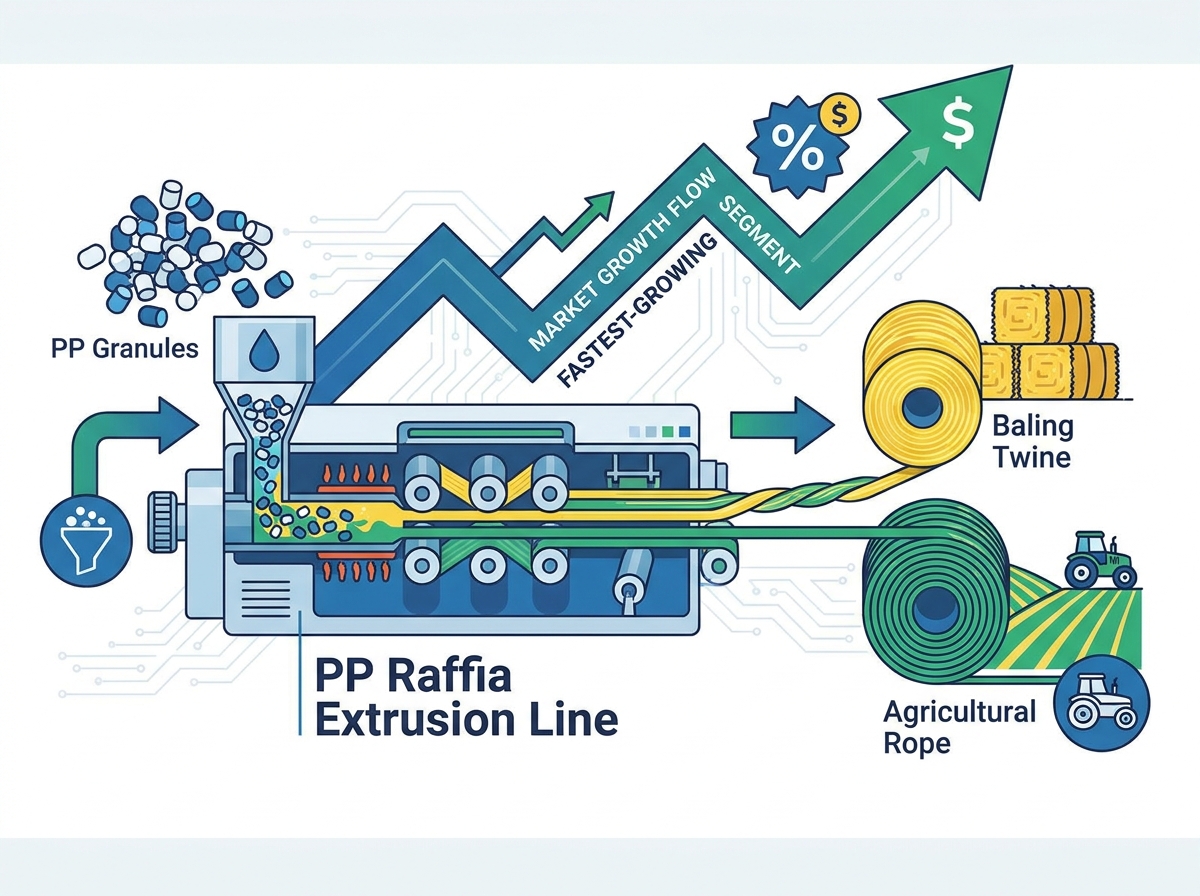
At the core of synthetic rope manufacturing is the raffia extrusion line. This complex, multi-stage industrial setup is engineered to transform raw polymer resin pellets into high-strength flat tapes. The operation is a continuous thermal and mechanical process. It involves melting the polymer, extruding it into a continuous thin film, rapidly cooling the film to solidify the plastic, slitting it into narrow tapes, and finally, thermally stretching those tapes to align the polymer chains. This specific molecular alignment gives the final product its exceptional tensile strength. For facilities looking to upgrade their output, integrating comprehensive PP raffia extrusion line solutions ensures a seamless and highly efficient production flow.
Operating a commercial-grade extrusion line involves a sequence of highly controlled thermodynamic and mechanical steps. Understanding this factory-floor workflow is critical for optimizing production efficiency and minimizing material waste.
In the agricultural supply chain, timing is absolutely critical. Peak harvest seasons generate sudden, massive spikes in demand for packaging materials. Equipment downtime during these periods can be financially catastrophic. Modern extrusion machinery is engineered to accommodate these seasonal fluctuations by offering exceptionally high output capacities. Specifically, standard industrial models featuring a 90mm screw diameter and a 33:1 length-to-diameter ratio can consistently deliver extrusion capacities exceeding 160 kilograms per hour. This continuous, high-speed production capability ensures manufacturers can build sufficient inventory to fulfill large-volume purchase orders without compromising physical properties.
Energy consumption represents a significant portion of the operational expenditure in plastic manufacturing. Leading equipment manufacturers now integrate advanced technologies to dramatically optimize electrical usage. The utilization of Variable Frequency Drives ensures that extruder motors only consume the power strictly necessary for the current load. Furthermore, top-tier machinery includes integrated edge-trim recycling systems. During the slitting process, the uneven edges of the film are cut away. Instead of becoming factory waste, these edge trims are immediately ground and fed directly back into the extruder hopper. This effectively reduces raw material waste to near zero and maximizes yield.
The functional efficacy of agricultural rope relies heavily on its knot strength and overall durability. High-performance machines grant operators granular control over manufacturing parameters. By micro-adjusting the stretching ratios, technicians can precisely tailor the stiffness and strength of the tape. Additionally, precision fibrillation creates a specific micro-lattice texture in the plastic. Smooth plastic tape would slip when tied, but properly fibrillated tape grips itself. This ensures that the heavy-duty knots tied by automated balers do not fail under immense pressure.
When evaluating materials for outdoor agricultural use, synthetic polymers consistently outperform alternatives due to their unique physical properties. Polypropylene has a very low specific gravity, making it incredibly lightweight while maintaining a high strength-to-weight ratio. This allows manufacturers to produce more meters of twine per kilogram of resin compared to denser plastics.
| Performance Metric | Natural Fiber Sisal | Polypropylene Twine |
|---|---|---|
| Tensile Strength | Inconsistent; varies by crop quality | Highly uniform; engineered for extreme tension |
| Moisture Resistance | Poor; absorbs water and rots quickly | Excellent; 100% hydrophobic and rot-proof |
| UV Stability | Naturally degrades in sunlight | High; achievable via HALS chemical additives |
| Machine Compatibility | Prone to shedding and jamming balers | Smooth running; zero shedding in equipment |
Untreated plastic is susceptible to photo-oxidation from sunlight. Imagine bales of hay left stored in open fields under scorching summer suns for months at a time. To combat degradation, UV stabilizer additives are mixed with the resin during the initial extrusion phase. This chemical addition prevents the polymer chains from breaking down under ultraviolet radiation, ensuring the twine maintains its structural integrity even during prolonged outdoor storage.
From a financial perspective, entering the agricultural rope market is strongly supported by the economics of the raw materials. Polypropylene is one of the most widely produced and globally commoditized plastics available today. Its abundant supply chain keeps raw material acquisition costs relatively low and stable compared to specialized engineering polymers. Because the material is lightweight, the yield measured in meters of twine per metric ton of raw material is exceptionally high. Consequently, the cost-per-unit drops significantly. This directly expands profit margins for manufacturers and ensures a rapid return on investment for the initial machinery purchase.
A strategic advantage of implementing a turnkey rope making machine is the inherent versatility of the equipment. A single extrusion line is not strictly limited to producing hay baling twine. By adjusting the slitting blade widths, modifying the stretching ratios, and utilizing different winding configurations, a factory can effortlessly pivot its product offerings. The exact same machinery can manufacture tomato twine for commercial greenhouses, general-purpose packaging string, banana tree support ropes, and even heavy-duty foundational strands for marine ropes. This operational flexibility secures multiple, year-round revenue streams.
Investing in industrial extrusion machinery requires a thorough, realistic analysis of your facility's operational capacity and market goals. First, evaluate the target output requirement to ensure the machine can meet your volume commitments during peak harvest seasons. Look for standard outputs of 150 to 200 kilograms per hour for medium-scale operations. Second, consider the denier range you intend to produce. Heavy-duty square balers require significantly thicker twine than standard round balers. Finally, factory floor space is a critical constraint. A complete raffia extrusion line operates linearly. It typically requires a continuous, unobstructed footprint of 25 to 35 meters to safely accommodate the extruder, water baths, long stretching ovens, and winding units.
The long-term reliability of the equipment manufacturer is just as important as the machine's technical specifications. Continuous extrusion processes are punishing on mechanical components. Buyers must evaluate the supplier's ability to provide comprehensive support, which should include on-site installation and extensive operator training. Robust warranties and a guaranteed, rapid supply chain for consumable spare parts, such as T-die components, slitter blades, and heating elements, are absolutely vital. Partnering with an established manufacturer minimizes unplanned downtime.
The fastest-growing segment within the plastic extrusion industry is heavily influenced by the adoption of smart manufacturing protocols. The next generation of equipment is defined by the integration of advanced automation. Modern machines are increasingly equipped with Programmable Logic Controllers featuring intuitive touch-screen interfaces. These smart systems offer real-time monitoring of critical parameters such as melt pressure, extrusion temperature, and line speed. Automated fault detection algorithms can instantly identify anomalies, alerting operators before significant material waste occurs. Remote diagnostic capabilities allow engineers to troubleshoot software or sensor issues from anywhere in the world.
While the mechanical superiority of synthetic twine is undisputed, the industry is actively addressing the environmental impact of plastic left inadvertently in agricultural fields. A major trend in materials science is the development and integration of bio-based or oxo-degradable additives during the extrusion process. These specialized compounds are engineered to maintain the twine's structural integrity during the high-stress baling and storage phases. However, they facilitate rapid molecular breakdown once the twine is discarded and exposed to specific environmental triggers like soil microbes or prolonged UV exposure.
The shift toward synthetic agricultural rope is a permanent evolution in the farming sector. It is driven by the undeniable need for efficiency, superior strength, and major cost savings. As global food production continues to scale, the reliance on automated harvesting machinery will only intensify the demand for high-quality packaging materials.
Investing in state-of-the-art agricultural rope manufacturing equipment is a highly strategic move designed to capture a rapidly growing, essential market. By leveraging low raw material costs and high-speed production capabilities, plastics manufacturers can secure a highly profitable, scalable business model.
Evaluate your current factory production capacity today. To ensure you select the most robust and efficient system, explore the advanced machinery solutions provided by industry leaders like CNRM. Contact their engineering team for a detailed quote, and review specific machine parameters to begin your strategic operational upgrade.
It is a specialized industrial extrusion and winding system designed to melt plastic resin, extrude it into flat tapes, stretch it for strength, and twist it into durable twine used primarily for tying bales of hay, straw, and forage.
The material is exceptionally lightweight, incredibly strong, and completely resistant to rot and moisture. When treated with specific UV stabilizers during the manufacturing process, it can withstand prolonged exposure to harsh sunlight in open agricultural fields without degrading.
The ideal denier depends on the crop and baler type. Standard round balers typically use twine ranging from 9,000 to 20,000 denier. High-density large square balers require much thicker specifications, often exceeding 40,000 denier, to withstand extreme knotting tension.
Fibrillation involves passing the stretched plastic tape over a pinned roller to create microscopic longitudinal slits. This net-like structure dramatically increases the flexibility of the twine and creates a rougher texture. This ensures that knots tied by automated machinery grip tightly and do not slip under pressure.
Yes. Modern extrusion lines are highly versatile by design. Factory operators can easily adjust the slitting blades, modify stretching ratios, and change winding settings to produce various deniers tailored for different industrial or agricultural applications.
While the exact footprint varies by output capacity, a standard industrial extrusion line requires a spacious factory floor. It typically needs 25 to 35 meters in length to safely accommodate the extruder, cooling baths, stretching ovens, and winders arranged in a continuous straight line.
Routine maintenance involves cleaning the extruder die head to prevent clogs, checking the sharpness of rotary slitting blades, lubricating winding gears, and ensuring that water cooling baths remain free of debris. Reputable machinery manufacturers always provide detailed maintenance schedules to ensure decades of reliable, continuous operation.