
Views: 0 Author: Site Editor Publish Time: 2026-08-12 Origin: Site


Producing commercial-grade synthetic rope requires precise synchronization between raw materials and high-capacity hardware. You cannot rely on basic manufacturing methods when human lives depend on industrial-scale safety. Modern factories demand absolute mechanical precision at every single step of the production line.
Moving from raw plastic pellets—whether Polypropylene (PP), Polyethylene (PE), or Nylon—to a certified finished product is never just about melting plastic. The procedure requires rigorous molecular alignment and constant tension control across multiple machine zones. Manufacturers must consistently meet strict industrial safety and tensile standards to remain competitive in today's market.
For procurement managers and factory engineers evaluating plant upgrades or vetting new suppliers, comprehensively understanding the end-to-end production cycle is critical. You must accurately assess long-term production viability and evaluate true machine return on investment. Ultimately, mastering these operational details guarantees higher final product quality and drastically fewer rejected batches.
The quality of synthetic rope hinges heavily on the precision of the initial heating and drawing phase inside the Extrusion Machine.
Structural integrity (tensile strength and load-bearing capacity) is engineered during the stranding phase, requiring highly calibrated Twisting Machines.
Choosing the right Rope Making Machine determines your factory’s output versatility (e.g., 3-strand, 4-strand, or braided).
End-of-line packaging via automated Winding Machines significantly reduces logistical bottlenecks and protects the rope’s torsion memory.
Every reliable rope begins in the material silo. Before any mechanical work happens, you must select the appropriate base polymer. The raw material choice dictates your entire production profile.
Differentiating between Polypropylene (PP), Polyethylene (PE), and Nylon is your first operational requirement. Each polymer behaves uniquely under heat and stress. Your choice of polymer directly dictates the machine temperature settings. It also determines the final commercial application.
Polymer Type | Key Characteristics | Primary Application | Extrusion Heat Profile |
|---|---|---|---|
Polypropylene (PP) | Lightweight, buoyant, highly rot-resistant. | Marine operations, aquaculture. | Medium (180°C - 220°C) |
Polyethylene (PE) | High abrasion resistance, slippery surface. | Agricultural netting, fishing nets. | Low (160°C - 200°C) |
Nylon (Polyamide) | Exceptional shock absorption, high stretch. | Mooring lines, heavy towing, climbing. | High (250°C - 280°C) |
You cannot dump raw pellets directly into a hopper and expect industrial-grade results. Pre-processing is non-negotiable. Two critical pre-processing steps define a successful run:
Color Masterbatch Mixing: You add concentrated pigment pellets (masterbatch) at a precise ratio (usually 1-3%) to color the rope. Uneven mixing creates weak structural spots.
Moisture Extraction: Hydroscopic materials like Nylon absorb ambient humidity. You must dry these pellets below 0.1% moisture content. Leftover moisture causes steam bubbles during melting, which shatters the yarn's integrity.
Cost-cutting often tempts manufacturers to use low-grade recycled pellets. Utilizing contaminated or degraded recycled pellets without proper melt-filtration leads directly to structural weak points. These flaws cause unpredictable breakage during ISO-standard tensile testing. We highly recommend using a minimum of 80% virgin material for heavy-duty load-bearing ropes.
Once you prep the pellets, they enter the most critical thermal phase. The Extrusion Machine serves as the heart of the entire operation. It transforms solid pellets into flexible, high-strength yarns.
The extrusion process relies on a complex heating barrel and screw mechanism. As pellets enter the hopper, a rotating screw pushes them forward through progressively hotter thermal zones. Friction and external band heaters melt the plastic pellets into a thick, viscous liquid.
The machine then forces this molten plastic through a specialized spinneret die. This die shapes the liquid into hundreds of individual monofilaments or flat tapes. High-quality extrusion requires exact thermal zoning. If the temperature fluctuates even slightly, you risk polymer degradation. Burned polymers lose their chemical bonding strength entirely.
Immediately after exiting the die, the hot yarns enter a water-cooling bath. We call this the quenching process. Quenching solidifies the outer layer of the yarn instantly. Next, the line pulls the yarns over a series of heated rollers.
This drawing or stretching phase is where the magic happens. Stretching the yarn physically aligns the chaotic polymer molecules into straight, parallel chains. This molecular alignment fundamentally transforms brittle plastic into high-tensile-strength yarn.
Factory engineers must monitor the stretching ratio constantly. Inconsistent roller speeds or temperature fluctuations here permanently cap the maximum load capacity of the finished rope. A minor speed jitter on the stretching rollers guarantees failed batch testing downstream.
Extruded yarns are incredibly strong, but they are too thin for industrial use. You must group and bundle them into robust strands. This phase demands perfect mechanical synchrony.
The factory line feeds hundreds of freshly extruded yarns onto individual bobbins. Operators load these bobbins onto a Twisting Machine. The equipment pulls the yarns together and twists them into a cohesive, unified strand.
The twisting machine manages dynamic tension across multiple feed points simultaneously. It must balance the pull on every single yarn to prevent breakage. Advanced setups use automated tension-feedback loops. They adjust spindle speeds in milliseconds to maintain a flawless strand profile.
During twisting, factory supervisors evaluate a critical metric: TPI (Twists Per Inch) or TPM (Twists Per Meter). TPI dictates the rope's final behavioral characteristics.
Over-twisting: This creates a stiff, unyielding strand. It reduces rope flexibility and unnecessarily increases material costs because you consume more yarn per foot.
Under-twisting: This leaves the strand loose and spongy. It sacrifices overall strength and severe abrasion resistance.
Finding the perfect TPI balance directly impacts your business margins. A reliable twisting machine ensures uniform TPI across high-volume runs, locking in your required specifications.
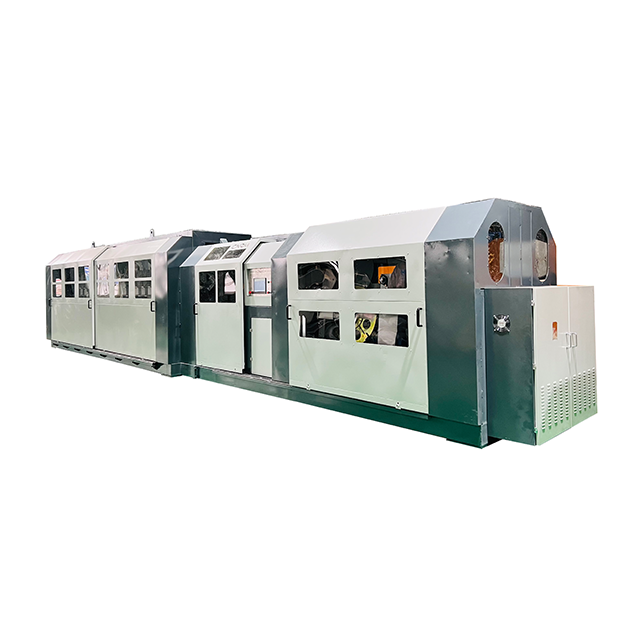
You now have massive spools of tightly twisted strands. The next stage merges them into the recognizable final product. This requires massive physical force and calculated geometry.
The factory mounts three or four large strand bobbins into the main cradle. A commercial Rope Making Machine begins combining these individually twisted strands. Crucially, the machine twists them together in the opposite direction of their initial internal twist.
This opposing tension is a masterpiece of mechanical engineering. It locks the structure together permanently, preventing the rope from unraveling under heavy loads. When evaluating this hardware, buyers should look for specific capabilities. Top-tier machines feature heavy cast-iron vibration reduction, continuous operation stability, and quick-change tooling for rapidly switching between different rope diameters.
Once the machine binds the rope, quality assurance steps in. This is the stage where technicians typically pull samples for destructive testing. They place the rope in hydraulic test beds and pull it until it snaps.
This compliance lens is mandatory. You must verify that the breaking strength meets advertised ISO or CE specifications (such as ISO 2307). If the rope breaks below the rated threshold, engineers must trace the failure back to the twisting or extrusion stages immediately.
Producing a high-quality rope is only part of the battle. You must package it efficiently so end-users can deploy it without hassle.
The production line takes the completed rope and neatly coils it onto spools, hanks, or large wooden reels. An automated Winding Machine executes this task. As the rope feeds onto the spool, the machine’s traverse guide moves back and forth to create perfectly parallel layers.
Maintaining constant linear tension during winding is vital. If the machine winds the rope too loosely, the layers collapse onto each other. If it winds too tightly, it crushes the core and damages the rope's structural memory.
Manual winding is labor-intensive and prone to tangling. Tangled ropes deeply frustrate end-users on boats or construction sites. Automated winding ensures uniform package density.
By achieving perfect cylindrical packaging, you optimize your shipping dimensions. You can fit more spools into a standard shipping container. Automating this final step of the Rope Manufacturing Process protects the product during rough global transit.
Upgrading or building a factory line requires serious capital. Decision-makers must look beyond flashy brochures and analyze the operational reality of the hardware.
When investing in this hardware stack, evaluate not just the upfront capital expense, but the long-term operational expenditures. The biggest hidden cost is energy consumption. Extrusion barrels draw massive electrical loads to melt polymers. You must ask suppliers for the kilowatt-per-hour consumption rates. Additionally, map out the required maintenance intervals for replacing heating bands and spinneret dies.
Factory demands change based on market trends. Your equipment must adapt. Can the extrusion line smoothly handle a shift from PP to Nylon? Does the hardware feature variable frequency drives to adjust output speeds? Furthermore, check if the winding unit can easily accommodate different spool sizes as buyer packaging demands change.
When evaluating machinery manufacturers, demand absolute transparency. Ask for guaranteed part availability for critical components like motors, inverters, and dies. Request verifiable data on defect rates and average machine lifespans. Finally, avoid vendors promising "zero-maintenance" operations. Industrial machinery running under constant tension always requires preventative maintenance.
Transitioning from plastic pellets to high-performance rope is a demanding, exact science requiring perfectly synchronized hardware.
Extrusion temperature and stretch ratios fundamentally define the yarn's core strength.
Accurate strand twisting prevents structural failure and optimizes material costs.
Automated finishing equipment protects your product and drastically lowers shipping overhead.
To upgrade your production capabilities safely, take proactive steps. Request detailed machine performance data sheets from reputable manufacturers. Schedule a line-capacity consultation with an engineering expert to map your floor space, and always review your tensile testing compliance metrics before finalizing an order.
A: Yes, it is technically possible, but highly challenging. Nylon requires a significantly higher temperature profile (up to 280°C) and specific screw designs to handle lower melt viscosities. Processing both on one machine requires extensive purging and recalibration. Dedicated setups for each material yield far higher stability and lower scrap rates.
A: A highly optimized production line typically achieves a 95% to 98% yield ratio. The 2% to 5% material loss accounts for startup scrap during extrusion thermal calibration, edge-trim waste, and quality control test samples. You can often regrind and recycle clean scrap for lower-grade applications.
A: You should verify machine calibration during every major product changeover (e.g., switching from 8mm to 12mm rope). For continuous 24/7 runs of the same product, perform tension checks once per shift. Deep mechanical calibration, inspecting gears and traverse guides, is recommended every 500 operating hours.