
Views: 0 Author: Site Editor Publish Time: 2026-11-08 Origin: Site


Producing agricultural baler twine requires strict adherence to tensile strength, UV resistance, and denier uniformity standards. Farmers rely heavily on these metrics during harvest season. Inconsistent yarn inevitably leads to knot failures and costly machinery downtime for end-users.
Achieving these exact standards relies entirely on the precision of the extrusion process. Fluctuations in melt temperature, stretching ratios, or quenching speeds directly compromise the final product. Even minor deviations can cause brittle tapes or uneven thickness across a single spool.
Investing in a high-grade PP Raffia Extruder designed for tight process control solves these challenges. It allows manufacturers to meet stringent agricultural packaging demands while maintaining excellent energy efficiency and high throughput.
This guide breaks down the critical steps of PP raffia extrusion. We will outline key evaluation criteria for machinery and highlight implementation risks. You will learn how to make an evidence-based equipment selection for your production floor.
Process Precision Dictates Tenacity: The stretching (drawing) and annealing phases are the primary determinants of the twine's final tensile strength and dimensional stability.
Equipment Versatility Matters: Modern operations often require machines capable of handling both PP and PE, making the choice between a dedicated raffia line and a versatile PP/PE Monofilament Extrusion Line a critical business decision.
Automation Reduces Margin of Error: Advanced extrusion lines with automated melt pressure feedback and tension-controlled winders significantly reduce tape breakage and uneven denier.
Total Cost of Ownership (TCO): Evaluating an extruder based purely on upfront cost ignores the long-term impacts of energy consumption, resin waste, and maintenance downtime.
Agricultural twine serves as the backbone of modern forage harvesting. Farmers expect flawless performance. You must deliver a product capable of handling intense mechanical loads and harsh environments.
Baler twine must endure high mechanical stress inside baling chambers. It faces relentless UV exposure in open fields. It also battles varying weather conditions, from heavy rain to extreme heat. For end-users, knot holding strength remains absolutely non-negotiable. If a knot slips, the bale collapses, causing severe logistical headaches.
Uneven yarn thickness creates massive downstream problems. We refer to this as denier variation. It leads to frequent breaks in high-speed baling machines. Every break forces operators to halt equipment and rethread the twine. For manufacturers, these inconsistencies result in rejected batches, damaged reputations, and lost contracts.
Producers constantly navigate the balance between speed and strength. Your primary goal is to maximize throughput measured in kilograms per hour. However, you cannot sacrifice the molecular orientation of the polymer. This specific orientation gives the yarn its strength. High-quality machinery ensures you achieve high yields while securing exceptional yarn tenacity.
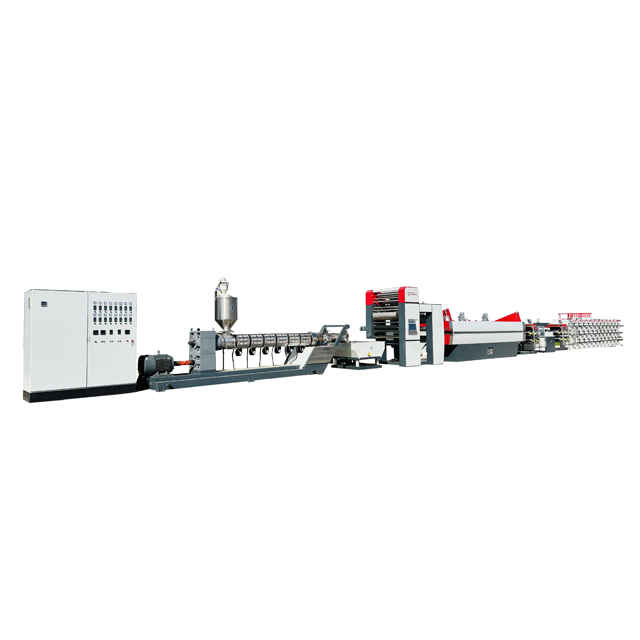
Transforming raw polymer pellets into high-strength baler twine requires several highly controlled steps. Each stage profoundly influences the final physical properties of the yarn.
Resin Feeding and Melting
The process begins as operators introduce raw materials into the hopper. You must use precise dosing systems for PP granules, color masterbatches, and UV stabilizers. Gravimetric blenders often provide the best accuracy. Inside the barrel, maintaining a consistent melt temperature prevents polymer degradation. If the melt becomes too hot, the molecular chains break down, destroying future tensile strength.
Film Extrusion and Quenching
The extruder pushes the molten polymer through a specialized T-die. This forms a continuous, uniform film. The film immediately enters a water bath for rapid cooling. This quenching process locks in the amorphous structure of the polymer. Proper quenching prepares the film for optimal drawing later in the line.
Slitting and Stretching (Drawing)
Blades cut the cooled film into precise tape widths. The line then heats these tapes and pulls them through a series of godet rollers. The rollers operate at specific speed ratios. This action stretches the tapes, aligning the polymer chains longitudinally. This alignment serves as the defining step for achieving high tensile strength.
Annealing (Relaxation) and Winding
Stretching introduces severe internal stress into the tapes. The annealing phase reheats the stretched tapes slightly. This heat relieves those internal stresses, ensuring excellent dimensional stability. It minimizes future shrinkage when the twine sits in the hot sun. Finally, inverter-driven winders spool the tapes onto bobbins with absolute precision, preparing them for twisting and roping.
Selecting the right equipment depends entirely on your target applications. Different machine configurations excel in distinct product categories.
Machine Configuration | Primary Application | Key Output Characteristics |
|---|---|---|
Raffia Extruder | Standard baler twine, woven sacks | Flat tapes, fibrillated yarns, high volume |
Danline Machine | Marine ropes, heavy agricultural nets | Thick, continuous filaments, high abrasion resistance |
Monofilament Extruder | Fishing nets, specialty agricultural mesh | Softness, high flexibility, excellent knotting |
This setup works best for producing flat tapes and fibrillated yarns. It delivers high-volume, cost-effective production. Manufacturers rely on this configuration for standard baler twine, woven sacks, and industrial ropes. It forms the backbone of conventional agricultural packaging operations.
If you need thicker, stronger, and more abrasive-resistant continuous filaments, consider a PP Danline Extrusion Machine. This equipment proves ideal for heavy-duty marine ropes and high-stress agricultural applications. Standard raffia often falls short in these extreme environments. Danline systems extrude individual filaments directly from a specialized die head.
A PE Monofilament Extruder excels in applications requiring higher flexibility, softness, and superior knot-holding capabilities. Producers frequently use these lines to manufacture fishing nets and specific agricultural shading nets. Polyethylene provides a distinct pliability unmatched by standard polypropylene tapes.
You must assess your future product roadmap carefully. Facility managers looking to diversify their portfolios should evaluate a dual-purpose PP/PE Monofilament Extrusion Line. This versatile option often yields a better return on investment. It allows you to run multiple resin types without purchasing separate, single-use machines.
The underlying technology of your extrusion line dictates your daily success. You should scrutinize several specific features before finalizing a purchase.
Screw Design and L/D Ratio: Look for optimized Length-to-Diameter (L/D) ratios. A ratio around 30:1 or 32:1 ensures homogenous melting. It provides consistent output without causing thermal degradation to sensitive polymer blends.
Melt Pump and Pressure Controls: You need closed-loop systems featuring a high-precision gear pump. These systems automatically adjust screw speed to maintain constant die pressure. This technology eliminates frustrating thickness variations across the web.
Oven Temperature Uniformity: Hot air ovens or hot plates must deliver perfectly uniform heat across the entire web width. Temperature variations during the stretching phase create weak spots in the yarn, leading to breakages.
Winder Technology: Inverter-driven, tension-controlled winders remain mandatory. They prevent tape deformation on the bobbin. Precise winding ensures smooth unwinding later during the high-speed twisting stage.
Energy Efficiency: Evaluate the thermal insulation of the barrel and ovens. Check the efficiency ratings of the drive motors. Specifying IE3 or IE4 standard motors drastically reduces daily electricity consumption.
Even the best extrusion lines require skilled operators to maintain optimal production. You will likely encounter several common processing issues. Understanding how to mitigate them keeps your factory running smoothly.
Tape breakage disrupts production heavily. It usually stems from impurities in recycled resin, uneven quenching, or incorrect stretching temperatures. To mitigate this risk, install high-quality continuous melt screen changers. You must also ensure precise water bath temperature control. A variance of just a few degrees in the quench bath ruins tape elasticity.
Thickness variations create massive headaches for downstream baling equipment. Surging in the extruder or poor die lip adjustment typically causes this issue. You can prevent this by utilizing automated melt pumps. Furthermore, you should establish strict preventative maintenance schedules for regular die cleaning and calibration.
Fibrillation gives the twine its soft feel and improves knot holding. When fibrillation fails, it usually points to dull fibrillator pins or incorrect roller speeds. You must implement regular inspection and replacement protocols for the fibrillation unit. Sharp pins ensure a clean, consistent split in the tape.
High-automation lines require specific, rigorous training. If operators do not understand the control panels, machine performance plummets. Factor in the vendor's commissioning and training support as a core evaluation metric. A good supplier stays on-site until your team masters the system.
Choosing the right extrusion equipment requires a thorough analysis of your production goals. You must align machine capabilities exactly with the demands of your end-users.
Base your equipment selection on the exact specifications required by your downstream customers. Consider necessary tensile strength, target denier ranges, and required UV stability. Match those specific metrics directly to the machine's stated performance capabilities.
Prioritize machines offering stable continuous operation. Look for equipment demonstrating lower scrap rates and significantly reduced energy consumption. Choosing a machine based merely on the lowest initial price tag often leads to severe operational headaches and inflated daily running expenses.
Reach out to manufacturers and request detailed technical specification sheets. Ask them for case studies focusing on similar baler twine applications. Finally, arrange a material test run using your specific polymer blends to verify real-world output quality.
A: A PP Raffia Extruder typically produces flat or fibrillated tapes by slitting an extruded film. A Danline machine extrudes individual, thicker filaments directly from a specialized die. This results in a stiffer, stronger yarn. Danline suits heavy-duty ropes perfectly, whereas raffia works best for standard agricultural twine.
A: Yes, many modern systems operate as a combined PP/PE Monofilament Extrusion Line. However, optimal processing requires specific screw designs and temperature profiles. Buyers must verify the machine's control system and hardware. They must handle the different melt behaviors of both polymers without compromising output quality.
A: The stretching ratio directly impacts the molecular orientation of the polymer. A higher ratio increases tensile strength (tenacity) but reduces elongation (stretchiness). If the ratio climbs too high, the tape becomes brittle and prone to breakage. Precise control over this ratio balances strength and flexibility flawlessly.
A: Energy consumption varies widely based on throughput capacity and machine design. Modern, energy-efficient lines utilize insulated barrels, optimized screw designs, and variable frequency drives (VFDs). These features keep consumption between 0.4 to 0.6 kWh per kilogram of extruded yarn. Always ask manufacturers for specific consumption guarantees.