
Views: 0 Author: Site Editor Publish Time: 2026-08-01 Origin: Site


Shifting from outsourced yarn purchasing to in-house production changes everything. It stands as a critical scalability decision. Industrial cordage producers need this strategy to control margins tightly. Outsourcing often leaves you vulnerable. You face unexpected supply chain delays constantly. You also deal with unpredictable quality variations daily. A Rope Extrusion Machine represents a significant capital investment. You must carefully align material science requirements. These include polymers like PP, PE, or PET. You must match them directly to your specific production throughput goals. Achieving this technical balance unlocks long-term profitability. This guide breaks down the operational mechanics entirely. We explore the specific configuration types available today. We also detail the strict evaluation criteria required. You need these practical insights to make an informed procurement decision. You will learn exactly how these systems operate. We help you choose the ideal equipment setup for your facility.
Primary Function: Rope extrusion machines convert raw polymer resins into high-tensile yarns (monofilament, danline, or fibrillated film) ready for twisting or braiding.
Operational Phases: The core process relies on controlled thermal melting, precise die extrusion, water quenching, and molecular orientation (stretching) to achieve required tensile strength.
Procurement Lenses: Viable investments must be evaluated on L/D (Length to Diameter) ratio efficiency, melt pressure stability, energy consumption per kilogram of output, and local compliance.
Vendor Selection: Partnering with an established Extrusion Machine manufacturer dictates the availability of post-sale commissioning, OEM spare parts, and localized technical support.
Relying on third-party filament suppliers introduces major supply chain vulnerabilities. You face inconsistent yarn denier frequently. These thickness variations squeeze your profit margins relentlessly. Lead times fluctuate wildly during peak manufacturing seasons. This lack of control limits your growth potential significantly.
Integrating this technology allows facilities to control polymer blending directly. You can add specific UV stabilizers easily. You mix custom colorants without waiting for supplier runs. This level of control reduces per-meter material costs drastically. You adapt to custom client specifications rapidly. Your market agility improves immediately.
Payback periods depend heavily on continuous operation. You achieve the best returns by establishing 24/7 run capabilities. You must also minimize scrap rates during material transitions. Fast changeovers protect your baseline profit consistently.
Best Practice: Always test small resin batches before initiating full production runs.
Common Mistake: Ignoring material waste costs during frequent color changeovers destroys expected margins quickly.
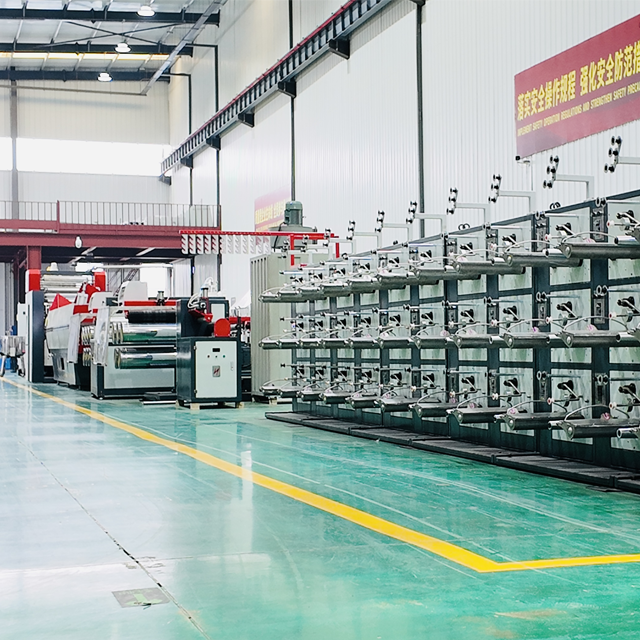
Understanding the internal mechanics helps you optimize daily output. The production cycle moves through five distinct stages.
Stage 1: Resin Feeding & Melting: Hopper dynamics control the initial material flow. Precision dosing units mix virgin polymer chips perfectly. They blend masterbatch and recycled granules evenly. The barrel and internal screw handle the heavy lifting. They create essential friction mechanically. Insulated heater bands help achieve a completely homogeneous melt.
Stage 2: Filtration and Die Extrusion: Melt-pump regulation ensures continuous pressure constantly. Minor pressure variations ruin yarn quality instantly. The system pushes the hot melt through precise spinneret dies. This action forms initial filaments. Sometimes it forms flat films depending on the mounted die head.
Stage 3: Quenching (Cooling): Immediate submersion follows extrusion. The hot yarn enters a chilled water bath. This rapid cooling solidifies the polymer structure securely. It prevents unwanted crystallization entirely. Temperature control in the bath remains absolutely critical.
Stage 4: Drawing and Annealing (Orientation): Heated stretching happens next. The line uses strong godet rollers and hot air ovens. Technical reality check: This step aligns molecular chains longitudinally. The draw ratio often reaches 1:8 or higher. It gives the rope its vital tensile strength. It also provides crucial abrasion resistance. Poor stretching yields weak products.
Stage 5: Winding: Tension-controlled spooling finishes the physical process. The equipment winds the finished yarn onto uniform bobbins. They are now ready for the ring twister. Some facilities move them directly to a rope making machine.
Choosing the correct equipment depends on your final product applications. Manufacturers generally divide these systems into two main categories.
Best For: Fishing nets demand high performance. Premium mooring ropes require this exact setup. High-abrasion applications rely on monofilament strength daily. They resist UV degradation exceptionally well.
Mechanism: The system extrudes individual strands. They feature a circular cross-section. They remain solid and incredibly durable under heavy mechanical stress.
Best For: General packaging tasks use this heavily. Agricultural baler twine relies on it exclusively. Standard marine ropes often utilize this specific method.
Mechanism: The die extrudes a flat sheet initially. The machine mechanically fibrillates this solid sheet. It splits the material into a web-like structure. It does this right before the winding phase. This method offers a much higher yield. It maintains a noticeably lower production cost overall.
Material Compatibility: Verify exactly what the machine requires. Does it need single-purpose screws? Some lines only process PP efficiently. Check if it features advanced bi-metallic screws instead. These durable screws handle PP, HDPE, and recycled blends flawlessly.
Extrusion Line Type Comparison
Feature | Monofilament Lines | Danline (Split Film) Lines |
|---|---|---|
Primary Application | Premium mooring ropes, fishing nets | Agricultural twine, general packaging |
Cross-Section Profile | Solid, circular individual strands | Flat sheet, mechanically fibrillated web |
Durability & Strength | Exceptionally high abrasion resistance | Moderate strength, highly flexible |
Cost Efficiency | Higher production cost per meter | Lower cost, higher volume yield |
Procuring industrial equipment requires strict technical evaluation. You must review several core components before purchasing.
Screw Design and L/D Ratio: Assess the length-to-diameter ratio carefully. It dictates overall melt quality directly. It also impacts your output volume heavily. Industry standards typically suggest 28:1 to 33:1. You need this specific range for optimal rope grade polymers.
Energy Efficiency (Kw/Kg): Evaluate electrical power consumption closely. Demand modern AC inverters. Look for heavily insulated heater bands. Energy-optimized motors project actual operational costs accurately. Modern variable frequency drives adjust power loads dynamically. Older inefficient motors bleed your profits constantly.
Automation and Quality Control: Demand user-friendly PLC touch screens. Programmable Logic Controllers reduce human error significantly. Look for automatic screen changers specifically. They reduce maintenance downtime drastically. Closed-loop tension monitoring ensures perfect strand consistency.
Footprint & Safety Compliance: Measure your available factory space precisely. Ensure the line length fits facility constraints securely. The equipment must meet necessary CE or OSHA safety standards. High-temperature areas pose severe burn risks. High-tension zones require physical guarding always.
Installing new manufacturing lines brings logistical challenges. You must prepare your facility properly beforehand.
Floor Space and Utility Demands: Extrusion lines require significant linear footprint. They often span 20 to 30 meters uninterrupted. You must measure your ceiling heights carefully. Extrusion towers often require vertical clearance. You need robust industrial power supplies installed. Industrial chilled water systems remain absolutely non-negotiable for cooling.
Operator Expertise: You must acknowledge the steep learning curve. Poor temperature settings ruin entire resin batches. Incorrect drawing ratios lead directly to brittle yarn. This skyrockets your material scrap rates rapidly.
Maintenance Downtime: Address the physical reality of routine maintenance. Screen changes halt production temporarily. Die block cleaning takes considerable shift time. Screw wear happens slowly but inevitably.
Mitigation Strategy: Factor mandatory on-site commissioning into the initial procurement contract. Require thorough training periods for all shift supervisors. Never skip initial vendor-led training sessions. They prevent costly operational mistakes later.
Finding a reliable vendor mitigates long-term operational risks. You need a long-term partner, not just a hardware supplier.
Track Record in Core Materials: Does the Extrusion Machine manufacturer have verifiable case studies? Ask how they handle your exact polymer mix. Processing 100% recycled PP behaves differently than virgin HDPE. Insist on seeing material-specific success stories.
Component Transparency: Reliable vendors specify origins of core components clearly. They name Siemens PLCs proudly. They highlight ABB drives prominently. They detail specific barrel metallurgy rather than obscuring essential manufacturing facts.
Factory Acceptance Testing (FAT): Insist on running your own resin. Do this at the manufacturer’s facility prior to shipping. This physical test prevents nasty surprises post-installation.
Service Level Agreements (SLAs): Evaluate their guaranteed response times strictly. Check regional availability of high-wear OEM parts. You will need replacement heaters eventually. Screens and godet bearings wear out frequently. Fast shipping keeps you operational continuously.
A reliable production line represents the foundational step in manufacturing. It guarantees quality-controlled cordage output continuously. This significant investment directly impacts ultimate rope durability. It heavily dictates the profit margin of your final product.
To move forward successfully, take these immediate actions:
Audit your current monthly yarn volume thoroughly.
Calculate your potential in-house operational costs accurately.
Request detailed technical spec sheets from your shortlisted vendors.
Analyze provided layout drawings to ensure perfect facility fit.
Confirm all industrial electrical requirements before signing any contracts.
A: Extrusion creates the yarn or filament directly from raw plastic chips. It handles the thermal melting and physical drawing process. The rope making machine then takes those finished yarns on bobbins and twists or braids them together. It forms the final structural rope you sell.
A: Yes, many modern machines process both materials easily. However, doing so requires specific screw designs. You need bi-metallic screws and precise temperature profile adjustments. You must clarify hardware limitations with your vendor. This prevents unnecessary downtime if you plan on switching materials frequently.
A: The operational lifespan varies significantly based on material abrasiveness. Processing recycled plastics generally accelerates metal wear compared to using virgin resins. Typically, a high-quality main extrusion screw lasts between 3 to 5 years before it requires intensive refurbishing or complete replacement.
A: Expect realistic material waste during thermal transitions. The machine takes time to stabilize completely. However, modern systems equipped with advanced PLCs minimize this scrap significantly. They optimize temperature ramps precisely. They automate tension controls to reach steady-state production faster, which reduces overall material loss.