
Views: 0 Author: Site Editor Publish Time: 2026-11-12 Origin: Site


The fundamental engineering difference between twisted rope constructions dictates far more than visual appeal. At its core, deciding between 3-strand and 4-strand laid ropes involves balancing strand count. It requires evaluating core inclusion and overall lay geometry. Selecting the right construction profile heavily dictates end-user performance. It determines crucial load limits and handling characteristics out in the field. Moreover, it determines the specific capital equipment required on your production floor. Optimal product yield relies entirely on the precision of the manufacturing equipment. This moves the strategic decision away from purely asking which rope performs better. Instead, we must ask how we manufacture it efficiently and profitably. In this article, you will explore the structural mechanics of hawser-laid and shroud-laid ropes. We will evaluate critical performance trade-offs like flexibility and abrasion resistance. Finally, you will learn how modernizing your production line ensures compliance with strict industrial load-bearing standards.
Structural Trade-offs: 3-strand rope offers maximum flexibility and lower weight, while 4-strand rope provides a rounder profile, higher abrasion resistance, and requires a center core to maintain structural integrity.
Application Fit: 3-strand dominates general utility, marine, and construction sectors due to ease of splicing; 4-strand is preferred for static lines, pulleys, and specialized heavy-lift applications.
Manufacturing Imperatives: Shifting from 3-strand to 4-strand (or producing both) requires precise tension calibration and advanced machinery to prevent core-pop and uneven strand distribution.
Equipment Standardization: Upgrading to a modern, automated Rope Making Machine reduces material waste and ensures compliance with strict industrial load-bearing standards.
Engineers classify 3-strand rope under "hawser-laid" construction. Three distinct strands twist together in a uniform direction. This creates a naturally stable, self-balancing structure. The three strands lock into a triangular equilibrium. They require no central core to maintain their shape. This geometric harmony prevents the rope from collapsing inward under heavy pressure.
Flexibility: Exceptionally high. You can coil, knot, and handle it easily. It adapts quickly to irregular shapes during rigging operations.
Strength-to-Weight Ratio: Highly efficient. It weighs noticeably less than 4-strand ropes of identical diameters. The fibers align highly efficiently against the primary direction of the load.
Spliceability: It serves as the undisputed industry standard. Workers create quick, secure eye splices. Splicing a 3-strand rope retains nearly the full breaking strength of the line.
You will find 3-strand rope dominating marine mooring lines and scaffolding setups. It excels in towing operations and general utility scenarios. Dynamic load absorption matters deeply in these environments. Manual handling demands ease of use. Mariners prefer it because it absorbs shock loads gracefully without permanently deforming.
Factories generally produce 3-strand rope faster. Setup requires significantly less complexity. Operators spend less time calibrating tensions compared to cored lines. You avoid the headache of managing a separate central core feed.
Best Practice: Always monitor the initial fore-twist tension closely during production. Consistent fore-twist guarantees a balanced final product.
Common Mistake: Running the take-up capstan too fast causes uneven strand distribution. This weakens the rope and leads to premature failure in the field.
Industry professionals call this "shroud-laid" construction. Four strands twist around a central axis. This design introduces a strict requirement for a central core. Without a core, the four outer strands collapse into a geometric void. They will deform and lose their structural integrity under heavy loads. The core serves as a vital internal pillar holding the outer strands in place.
Abrasion Resistance: It offers higher surface area contact. It wears evenly on winches and heavy steel sheaves. The increased contact area distributes friction heat more effectively.
Form Stability: A rounder shape prevents flattening. It survives extreme crushing pressure inside mechanical pulleys.
Elongation & Kinking: It stretches considerably less. It heavily resists twisting or kinking under severe dynamic loads.
Manufacturers target winch lines and power transmission systems. Arborist rigging relies heavily on 4-strand designs. Aesthetic applications also demand a smooth, perfectly round profile. You use it wherever friction management remains your top priority.
Manufacturing defects increase dramatically if tensions mismatch. Core tension must perfectly match outer strand tension. You need sophisticated take-up mechanisms. Tensioning mechanics must operate flawlessly. If the core runs too tight, it snaps inside the rope. If it runs too loose, you experience "core-pop" where the core bulges through the outer strands.
Structural Comparison Overview
Feature | 3-Strand (Hawser-Laid) | 4-Strand (Shroud-Laid) |
|---|---|---|
Core Requirement | None | Mandatory |
Flexibility | Maximum | Moderate |
Abrasion Resistance | Moderate | Maximum |
Splice Complexity | Low (Standard) | High (Specialized) |
Profile Shape | Triangular/Bumpy | Smooth/Round |
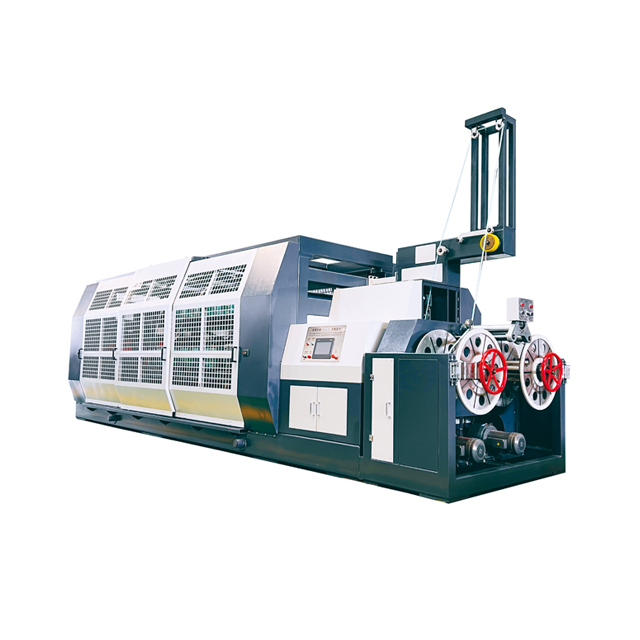
Standard legacy equipment struggles heavily in modern manufacturing environments. Transitioning between 3-strand and 4-strand setups causes immense trouble. You face inconsistent pitch across long runs. 4-strand ropes suffer frequently from catastrophic core-pop. Consequently, factory scrap rates climb unacceptably high. Solving this requires analyzing your hardware capabilities directly.
Evaluating new capital equipment demands a rigid framework. You must assess the following parameters before committing to a system upgrade:
Versatility: Can the Rope Making Machine switch configurations seamlessly? Look for modular flyer heads. Ensure the machine accommodates a dedicated core-feed route for 4-strand setups.
Tension Consistency: Observe how it handles individual strand twist. Compare this individual fore-twist against the final closing twist. Mechanical synchronization here determines your final breaking strength.
Footprint & Output: Balance the physical machine size against production yields. Calculate your required kilograms-per-hour output. Maximize your factory floor space utilization.
Modern cordage manufacturing demands strict repeatability. We are moving rapidly away from mechanical-geared machines. The industry embraces digitally controlled, multi-motor architectures. These advanced systems provide unprecedented control over the twisting process.
A High Speed Three-Motor Rope Making Machine represents the modern standard. Independent motors drive the flyer, the take-up, and the drawing capstan separately. They completely eliminate mechanical gear limitations. Operators adjust twist pitches smoothly on the fly. You no longer need to halt production to swap out physical gear cogs. This flexibility drastically improves daily operational throughput.
Maximizing machine uptime remains crucial. Utilizing an Endless Rope Making Machine boosts your operational efficiency dramatically. You handle continuous, long-length production runs effortlessly. Spool changing interruptions vanish entirely. Downtime drops drastically, keeping your production lines moving. You feed continuous strands directly from creels into the forming die. This continuous flow prevents tension drop-offs commonly associated with machine stops.
A PLC Controlled Endless Twisted Rope Machine actively mitigates costly human error. Digital PLCs lock your production parameters tight. Tension, pitch, and rotational RPM stay strictly compliant. You ensure verifiable breaking strength for highly demanding industrial buyers. The PLC monitors every sensor constantly. It adjusts motor speeds in real-time to maintain flawless twist geometry.
Upgrading your factory floor introduces specific operational challenges. You must proactively manage these risks to ensure a smooth transition.
Upgrading brings a steep initial learning curve. Operators must transition from turning mechanical dials to navigating digital touch interfaces. Comprehensive training remains crucial. Do not rush the onboarding process. Ensure your technical staff fully understands the PLC programming logic. Familiarize them deeply with error code diagnostics to minimize troubleshooting delays.
Assess the long-term durability of your equipment thoroughly. Flyer bows and internal bearings endure extreme centrifugal stress. High-RPM production conditions demand highly robust components. Regular preventative inspection prevents catastrophic mechanical failures.
Best Practice: Lubricate flyer bearings strictly according to manufacturer schedules. Monitor the carbon fiber bows for micro-fractures weekly.
Common Mistake: Ignoring abnormal machine vibrations. Vibrations indicate an unbalanced bobbin load, which destroys main shaft bearings rapidly.
Base your final purchasing decisions entirely on your primary target market. Targeting high-volume commercial marine markets primarily buying 3-strand ropes? Prioritize sheer speed and endless production capabilities. Targeting specialized arborist rigging relying on 4-strand ropes? Prioritize independent motor tension control. Core-handling features become your absolute top necessity. Align your hardware directly with your most profitable sales channels.
Choosing between 3-strand and 4-strand rope constructions fundamentally shapes your manufacturing strategy. 3-strand designs deliver unmatched flexibility and cost-efficiency. 4-strand designs ensure exceptional durability, roundness, and advanced friction management. Producing commercial-grade twisted rope requires upgrading your production infrastructure. Legacy equipment severely limits your potential output and product quality. Strand count matters less than pure manufacturing precision.
Evaluate your production volume data closely. Analyze your current scrap rates carefully. Build a compelling business case for integrating modern, multi-motor, PLC-controlled machinery. Act decisively to secure your market share in the highly competitive industrial cordage sector.
A: Three strands naturally rest against each other to form a solid center. Four strands leave a geometric void in the middle. Without a core, the rope will collapse and deform under load. The core maintains the necessary structural integrity and keeps the outer strands perfectly positioned.
A: Not necessarily. 4-strand offers more material volume and higher abrasion resistance. However, 3-strand typically provides a slightly higher breaking strength per weight. The fibers in a 3-strand rope align more efficiently in the direct line of the applied tensile load.
A: Yes. A modern, adjustable Rope Making Machine handles both configurations easily. You simply swap out the flyer and bobbin setups. The machine must also possess the necessary routing infrastructure for a center core line to accommodate the 4-strand design.
A: Payback is typically achieved through drastically reduced material scrap. Precise digital tensioning eliminates common geometric defects. You also benefit heavily from lower changeover times. Furthermore, PLCs guarantee consistent pitch, allowing you to meet strict ISO and commercial cordage compliance standards easily.