
Views: 0 Author: Site Editor Publish Time: 2026-08-04 Origin: Site


Acquiring a new production setup represents a critical capital expenditure. This investment dictates your operational scaling limits. It also determines your long-term labor dependency and facility profitability. Choosing between semi-automatic and fully automatic systems goes far beyond comparing sheer output speeds. You must thoroughly evaluate workflow continuity and raw material consistency. Maintenance infrastructure plays an equally vital role in your final decision.
Make the wrong equipment choice, and you risk severe production bottlenecks. Overinvest in automation too early, and you bleed capital. Underinvest, and you lose market share to faster competitors. You need a clear strategy. This guide provides a balanced, evidence-based framework for evaluating both automation tiers. We explore volume thresholds and labor dynamics. You will learn how to align your specific operational goals with equipment realities. Ultimately, this helps you maximize returns and build a highly resilient manufacturing floor.
Volume Thresholds Drive ROI: Fully automatic machines are generally justified only when continuous, high-volume production of standardized rope outpaces current manual feed rates.
The Durability vs. Complexity Trade-off: Semi-automatic models often boast higher mechanical durability and simpler repairs, whereas fully automatic systems introduce complex sensor and actuator networks requiring specialized maintenance.
Labor Arbitrage: The choice hinges on comparing local manual labor availability and costs against the upfront CapEx and skilled technician requirements of automated production.
Material Sensitivity: Automatic machines require strict raw material tolerances to prevent jams, while semi-automatic setups allow operators to manually compensate for minor yarn/strand variations.
You cannot solve a production problem without locating its true source. Assess whether your current limitation stems from actual twisting and coiling speeds. Often, operator loading and unloading times cause the real delays. A faster machine will not help if operators struggle to load raw materials quickly. You must document specific downtime incidents. Time your workers during spool changeovers. Analyze these time logs carefully. If manual feeding severely limits your daily output, automation becomes highly attractive. If the mechanical twisting process itself causes the delay, upgrading the core machinery solves the problem.
Advanced equipment requires specific facility conditions to function properly. You must outline exact floor space requirements before purchasing new assets. High-speed systems often demand larger footprints for automated feeding mechanisms. Continuous power needs also play a crucial role. Voltage drops can damage sensitive electronics in modern machines. Consider your upstream and downstream integration capabilities carefully. You need seamless transitions from extrusion to twisting to packaging. A Rope Making Machine must align perfectly with your existing conveyors and hoists. Do not isolate the new equipment from your broader factory workflow.
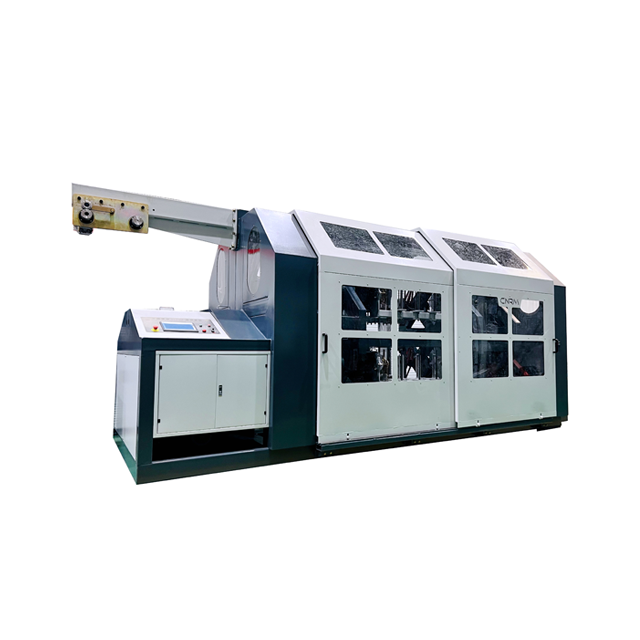
Semi-automatic setups rely heavily on human interaction. Explain the exact requirement for manual intervention on your floor. Operators handle tasks like spool loading and manual threading. They must tie off ends and transfer bobbins physically. This keeps workers actively engaged in the production cycle. Human hands provide immediate feedback during setup phases. Operators can feel tension differences. They spot visual defects instantly. However, this workflow introduces physical fatigue. Production speeds remain tied directly to human endurance levels. You must carefully balance this labor dependency against your output goals.
Mechanical simplicity offers incredible advantages on a busy factory floor. Semi-automatic machines highlight this simplified mechanical architecture perfectly. They contain fewer points of sensor failure. You face fewer software glitches during peak production hours. This translates to easier on-site troubleshooting for your standard mechanics. High baseline durability keeps these machines running for decades. Traditional gears and belts tolerate harsh industrial environments easily. Dust, vibration, and temperature swings rarely cause catastrophic shutdowns here. When parts do wear out, your team replaces them quickly. You avoid expensive calls to specialized software technicians.
Modern factories thrive on operational agility. You often need to switch product lines rapidly. Semi-automatic equipment makes retooling much easier. Operators adjust settings quickly for different rope diameters. They handle diverse materials seamlessly. You can process nylon, sisal, PP, and PE on the same shift. Custom short-run batches become highly profitable. Automated counterparts require extensive software reprogramming for similar changes. They struggle with small batches due to lengthy calibration times. Semi-automatic models allow you to accept diverse custom orders confidently. They give your sales team incredible flexibility.
Certain scenarios make semi-automatic machinery the undisputed champion. Bespoke manufacturing represents a primary profitability sweet spot. Variable product lines also benefit greatly from this agility. Facilities located in regions offering favorable labor economics see massive returns here. If skilled maintenance engineers cost a premium, avoid complex automation. Focus on robust mechanical systems instead. Leverage your accessible workforce to drive daily production. You keep capital expenditures low. You maintain high operational flexibility. This combination ensures steady cash flow in unpredictable markets.
True scale demands autonomous production cycles. An intelligent rope making machine provides continuous feeding and twisting capabilities. It handles automated spooling and coiling seamlessly. These systems operate with minimal human touchpoints. Raw materials enter one side. Finished, packaged coils exit the other. Operators simply monitor display screens and replenish bulk feed silos. This continuous flow eliminates shift-change slowdowns. You achieve true lights-out manufacturing potential. Production volume scales exponentially compared to manual methods. This raw speed justifies the initial capital investment rapidly for high-demand facilities.
High-volume production amplifies small defects into massive profit losses. You must maintain strict quality control at scale. Automated systems provide incredibly precise tensioning control. Continuous processing drastically reduces common human errors. Sensors monitor product dimensions thousands of times per minute. They ensure strict adherence to standardized rope diameters. Tensile strength remains completely uniform across massive production runs. Operators cannot match this level of micro-adjustment manually. If you supply demanding industries like maritime or climbing gear, this consistency is mandatory. Automation guarantees your product meets stringent safety certifications every time.
Do not let high production speeds blind you to operational realities. Address the reality of high initial capital expenditures honestly. The hidden costs of automation run deep. You must employ specialized technicians for PLC troubleshooting. Programmable Logic Controllers dictate every machine movement. When a PLC fails, production stops entirely. General mechanics cannot fix these complex digital issues. You also face the high cost of replacement proprietary parts. Sensors, servo motors, and optical guides cost significantly more than standard belts. Budget for these specialized expenses before upgrading your facility.
Financial modeling dictates your automation strategy. Establish clear models for calculating capital recovery timeframes. You must track per-meter production margins accurately. Map these margins against your daily output volume. The transition to fully automatic clears the financial hurdle only at specific volume thresholds. If your machines sit idle waiting for orders, automation wastes capital. If you run three shifts at maximum capacity, automation pays for itself quickly. Analyze your historical sales data. Project your growth over the next five years. Use these numbers to justify your initial expenditure objectively.
Machines process raw materials differently based on their design. Automated systems demand highly consistent yarn and strand inputs. They use precise optical sensors and narrow tension guides. Broad material variances cause immediate micro-stoppages. A single thick knot can jam a fully automated line instantly. Conversely, semi-automatic machines tolerate broader material variances easily. Operators manually compensate for minor input flaws. They guide imperfect materials through the twisting dies safely. Assess your raw material supply chain carefully. If your suppliers deliver inconsistent quality, fully automated machinery will frustrate your team.
Labor structures directly impact your machinery choices. Compare your current workforce dynamics objectively. Maintaining a multi-shift general labor workforce suits semi-automatic operations perfectly. You pay standard wages for physical operation and basic troubleshooting. Fully automatic operations require a completely different team structure. You need a highly skilled automation engineering team. A single shift of these specialists often costs more than general laborers. They demand competitive salaries and continuous training. You must decide which labor model fits your regional hiring pool best. Do not buy automated equipment if you cannot hire local PLC technicians.
Use the following breakdown to visualize the operational differences clearly. It outlines fundamental contrasts across critical factory conditions.
Operational Dimension | Semi-Automatic Setup | Fully Automatic System |
|---|---|---|
Capital Expenditure | Lower initial investment. Ideal for phased scaling. | High upfront cost. Requires long-term volume commitments. |
Maintenance Needs | Standard mechanics. Easily sourced replacement parts. | Specialized PLC technicians. Proprietary sensor replacements. |
Material Flexibility | High. Easily adapts to inconsistent yarn quality. | Low. Requires strictly standardized raw materials. |
Batch Changeover | Rapid. Excellent for custom, short-run manufacturing. | Slow. Best suited for continuous, identical production runs. |
New technology disrupts established factory routines heavily. Detail the friction of transitioning your workforce carefully. Workers move from manual mechanical operation to passive machine monitoring. This psychological shift causes friction. They must learn software-based troubleshooting methods. Operators who relied on physical intuition must now read digital diagnostics. You cannot ignore this change management challenge. Implement robust training programs months before the equipment arrives. Pair experienced workers with external installation engineers. Empower your team to master the new digital tools. Poor change management leads directly to high employee turnover and machine misuse.
Maintenance philosophies must evolve alongside your equipment. Reactive maintenance works acceptably for simpler semi-automatic models. You wait for a belt to snap, then you replace it. Fully automatic machines forbid this approach entirely. You must highlight the necessity of proactive maintenance schedules. Sensor lenses require daily cleaning. Actuators need precise lubrication intervals. Software requires regular patch updates. A single skipped maintenance cycle can destroy expensive internal servos. Build a strict digital maintenance calendar. Hold your maintenance team accountable for these proactive inspections. Preventive care guarantees your high-speed production remains uninterrupted.
Global supply chains dictate your ultimate operational uptime. Evaluate the risk of prolonged downtime carefully. Automated systems fail completely if specialized parts remain unavailable. Ensure local OEM support exists in your region. Verify that diagnostic software expertise is just a phone call away. Ask vendors about their guaranteed response times. Where do they warehouse their proprietary spare parts? If a critical PLC board ships from overseas, you lose weeks of production. Demand strong service level agreements before signing any purchase order. Strong vendor partnerships secure your long-term success.
Data must drive your final purchasing decision. We strongly recommend tracking current Overall Equipment Effectiveness (OEE) diligently. You need a solid baseline. Document all downtime logs meticulously for one full quarter. Identify exactly where delays happen. Separate mechanical failures from operator loading delays. This audit reveals your true factory capacity. It stops you from buying solutions to the wrong problems. Once you establish this baseline, you can request accurate vendor quotes. Share your audit data with machinery reps. Force them to prove how their equipment improves your specific OEE metrics.
Never rely solely on glossy marketing brochures. Advise your buying committee to request a formal Proof of Concept. You must supply your specific raw materials to the machine manufacturer. Ask them to perform dedicated trial runs. These trials test the exact tolerance limits of their equipment. You will see the actual output speeds using your yarn. If the machine jams frequently during the PoC, walk away. A successful PoC eliminates purchasing anxiety. It proves the equipment handles your unique production variables flawlessly. Always demand real-world evidence before finalizing heavy industrial investments.
Neither machinery option proves universally superior across all scenarios. The "best" choice remains strictly contextual to your specific manufacturing scale. It depends heavily on local labor availability and your required product variety. Semi-automatic machines offer unmatched resilience and agility for custom batches. Fully automatic systems dominate high-volume, standardized production runs.
You must look beyond the initial sticker price. Encourage your stakeholders to build a comprehensive 5-year lifecycle expense model. Factor in continuous maintenance needs, daily energy consumption, and specialized labor rates. Evaluate your raw material consistency honestly. Align your capital investments with your realistic operational capabilities. By executing a thorough facility audit and demanding a solid proof of concept, you secure a highly profitable manufacturing future.
A: The timeframe depends entirely on your specific variables. Shift structures, volume increases, and reduced labor overhead dictate the speed of return. Facilities running continuous shifts typically target an 18 to 36-month capital recovery period in high-output scenarios. Lower volumes stretch this timeframe considerably.
A: Yes, in terms of mechanical robustness. Semi-automatic machines use simpler mechanical architectures. They lack delicate sensors and complex PLCs. This makes them significantly easier to repair on-site. The straightforward design reduces catastrophic downtime risks in harsh factory environments.
A: They can, but retooling takes much longer. Automated tensioners remain highly sensitive to varied material properties. Switching from consistent synthetic polymers to variable natural fibers requires extensive software recalibration. Manual adjustments on semi-automatic machines handle these material changes much faster.
A: The primary hidden costs involve specialized labor and proprietary parts. You must pay competitive salaries for skilled PLC technicians. Additionally, automated lines demand strict raw material quality to avoid sensor jams. Purchasing premium, highly consistent yarn increases your daily operational expenses significantly.