
Views: 0 Author: Site Editor Publish Time: 2026-09-03 Origin: Site


Upgrading or procuring a new extrusion line requires balancing significant capital expenditure against the need for strict yarn tenacity. You must minimize downtime. You also want lower energy consumption per kilogram of output. Modern netting applications demand high knot strength and UV stability. For production managers, the challenge is finding equipment consistently achieving these specs. It must also maintain flexibility across different polymer grades. This guide outlines the critical technical parameters. It covers material handling realities. You will also learn about implementation risks to consider before shortlisting a machinery vendor.
Tenacity & Precision: Profitable fishing and safety net production relies on precise temperature control during the stretching and annealing phases to guarantee optimal yarn draw ratios.
Material Flexibility: Top-tier extrusion systems must maintain continuous output stability even when blending virgin polymers with recycled PP/PE granules.
Operational Efficiency: True ROI is dictated not just by maximum output capacity, but by minimizing electrical consumption (kW/kg), reducing scrap rates, and streamlining die-head changeovers.
Vendor Validation: Rigorous Factory Acceptance Testing (FAT) using your specific raw materials is mandatory to verify claims regarding output speed and diameter consistency.
Before evaluating machinery, you must define the exact physical properties your end product requires. Commercial fishing and construction safety sectors tolerate zero errors. A failed net can result in lost catches or catastrophic job site accidents. Therefore, achieving specific non-negotiable properties is mandatory for both PE monofilament yarn and heavy-duty safety net yarn.
The primary success metric is tensile strength. This dictates how much straight-line force the yarn can withstand. However, knot strength often proves more critical in netting applications. When manufacturers knot the yarn, the polymer structure experiences extreme stress at the bend. High-quality yarn resists this stress without snapping. Denier consistency forms the third pillar of success. If the yarn diameter fluctuates, weak points inevitably develop. Uniformity guarantees smooth downstream processing in netting machines.
Operators frequently face a difficult trade-off between yield and quality. Pushing a line to its maximum rated speed sounds highly profitable. However, excessive speeds can compromise molecular orientation. If the cooling and drawing stages do not scale proportionately to the extruder output, the polymer chains fail to align correctly. This misalignment creates brittle yarn. We highly recommend mapping your target output against the specific cooling capacity of the equipment. Faster line speeds demand longer quench tanks and larger stretching ovens.
Finally, end products must meet stringent international compliance standards. Construction safety netting requires massive load-bearing capacities. Commercial fishing nets demand aggressive UV resistance to survive prolonged sun exposure. Incorporating UV stabilizers and color masterbatches during the extrusion process changes how the melt behaves. You must ensure the chosen equipment homogenizes these additives flawlessly. Consistent additive dispersion prevents localized degradation in the final net.
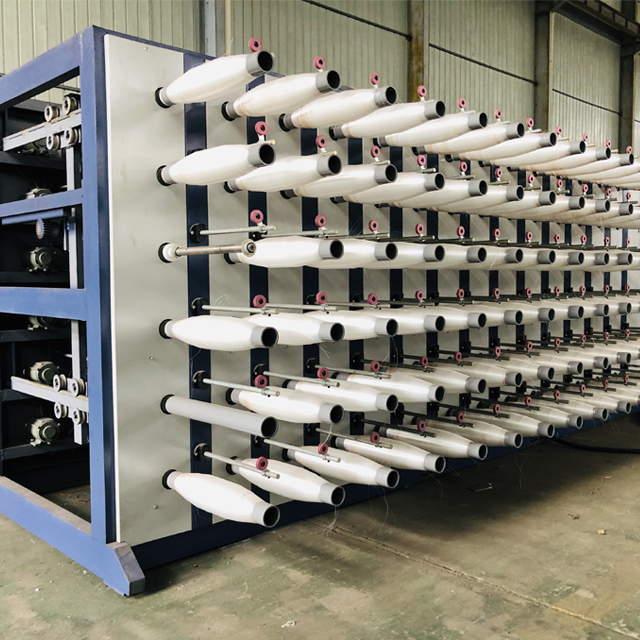
Evaluating an extrusion system requires looking closely at its internal mechanics. The heart of the system dictates the quality of the final filament. You must scrutinize several key components to ensure they meet your production demands.
The screw inside the extruder barrel performs the heavy lifting. A specialized PP monofilament extruder uses distinct Length-to-Diameter (L/D) ratios. Industry standards typically favor an L/D ratio of 30:1 or 32:1. This extended length gives the polymer ample time to melt evenly. It prevents localized overheating, which degrades the plastic. A well-designed barrier screw separates the melted polymer from the solid pellets. This separation guarantees complete plasticization before the material reaches the die head.
Pressure fluctuations create inconsistent yarn. To combat this, modern systems utilize high-precision melt pumps. These gear pumps sit between the extruder and the die. They deliver a constant, volumetric flow of molten plastic regardless of upstream pressure variations. Before the plastic enters the pump, it passes through a screen changer. Continuous, double-piston screen changers are strictly necessary. They allow operators to swap clogged filters without stopping the machine. This prevents yarn breakage at the spinneret and drastically reduces scrap.
Once the polymer exits the spinneret, it enters the quench tank. The water flow dynamics here are critical. You must shock-cool the polymer immediately. Shock cooling prevents the plastic from crystallizing too early. If it crystallizes before the drawing phase, it becomes impossible to stretch effectively. The best quench tanks feature multi-zone temperature controls. They also eliminate dead spots in the water flow. Turbulence can scar the soft yarn surface, so the water must circulate smoothly.
Drawing gives the yarn its final strength. The system pulls the semi-cooled strands through a series of godet rollers. The first stretching phase happens in a hot water bath. The heat softens the strands just enough to allow the molecular chains to align longitudinally. The second phase, called annealing, happens in a hot air oven. Here, controlled heat and precise tension lock the molecules in place. This step relieves internal stress and prevents the yarn from shrinking later.
Table: Core Technical Specifications Summary
Component | Critical Parameter | Impact on Production |
|---|---|---|
Extruder Screw | L/D Ratio (30:1 to 32:1) | Ensures homogenous melt without polymer degradation. |
Melt Pump | Volumetric Flow Precision | Maintains exact yarn diameter; prevents denier fluctuation. |
Screen Changer | Continuous Double-Piston | Allows filter changes without stopping the line. |
Quench Tank | Laminar Flow Control | Shock-cools the melt evenly; prevents early crystallization. |
Annealing Oven | Temperature Uniformity | Locks molecular alignment; prevents yarn shrinkage. |
The manufacturing landscape is shifting toward sustainability. Clients increasingly demand products made from recycled materials. However, incorporating recycled HDPE, PE, or PP presents distinct engineering challenges. You cannot simply feed recycled flakes into a standard machine and expect premium results.
Recycled polymers carry inherent impurities. They also retain trace moisture from the washing process. When moisture hits the heated extruder barrel, it turns into steam. This steam creates micro-bubbles inside the molten plastic. If these bubbles reach the spinneret, the yarn breaks instantly. To handle this, your equipment needs enhanced degassing zones. Vented extruders utilize powerful vacuum pumps to suck moisture and volatile gases out of the barrel before the melt reaches the die.
Filtration becomes exponentially more important when running recycled materials. Virgin pellets melt cleanly. Recycled granules often contain microscopic specks of metal, dirt, or incompatible plastics. You must equip your line with heavy-duty filtration systems. Laser-drilled micro-screens catch these impurities. If you fail to filter them out, they create weak nodes in the yarn. These nodes will snap during the high-tension drawing process.
Maintaining transparency regarding assumptions is vital for production planning. Utilizing recycled materials undoubtedly lowers raw material costs. However, you must accept certain operational realities. Processing recycled blends typically requires a slight reduction in overall line speed. It also demands closer operator monitoring. The melt flow index (MFI) of recycled batches fluctuates. Operators must continuously tweak zone temperatures to maintain consistent output quality. Planning for these adjustments prevents unrealistic yield expectations.
Evaluating a fishing net yarn machine goes beyond its maximum hourly output. You must consider how the machine integrates into your facility. Efficiency metrics dictate long-term profitability. You need a system scaling smoothly across multiple shifts.
Extrusion lines consume massive amounts of electricity. Heating the barrel and driving the main screw account for the bulk of this power draw. You must evaluate the energy efficiency of every component. Look for machines utilizing advanced insulation blankets around the barrel heaters. These blankets trap heat, reducing the load on the electrical elements. Furthermore, demand servo motors instead of standard AC induction motors. Servo motors adjust their power draw based on real-time load requirements. They run cooler and can slash overall electricity usage dramatically.
Labor overhead deeply impacts your bottom line. Older machines require constant manual adjustment. Modern systems rely on Programmable Logic Controllers (PLCs) and intuitive Human-Machine Interfaces (HMIs). A robust PLC system stores specific recipes for different yarn types. When you switch from heavy safety netting to fine fishing line, the operator simply selects the recipe. The machine automatically adjusts barrel temperatures, roller speeds, and oven heat. Automated winding systems are equally crucial. They switch bobbins without slowing down the line, drastically reducing operator error and manual labor requirements.
A complete extrusion line often stretches 30 to 45 meters in length. You must carefully plan your plant layout. Evaluate the physical footprint before committing to a purchase. Ensure you leave adequate space around the equipment for maintenance access. Additionally, consider utility integrations. High-speed lines require robust water chilling systems to supply the quench tanks. Your facility must have the necessary electrical infrastructure and plumbing to support continuous, 24/7 operations without bottlenecking.
Buying heavy industrial equipment carries inherent risks. You are not just buying metal; you are buying a long-term production capability. Shortlisting vendors requires a methodical approach to weed out unreliable suppliers.
Never bypass a Factory Acceptance Test (FAT). A rigorous FAT is your primary safety net. Do not let the vendor run the machine empty. Do not let them use their own perfect virgin resin if you plan to use recycled blends. Ship your exact raw materials to their facility. Demand they run the line at the maximum rated speed for at least four continuous hours. During this test, closely measure the yarn diameter. Check the final bobbin weight. This real-world test verifies their marketing claims instantly.
After-sales support often makes or breaks an investment. Extrusion lines contain critical wear parts. Screws degrade over time. Spinneret plates clog. Heater bands burn out. Evaluate the vendor's spare parts supply chain. Ask them where they stock their components. If a main drive motor fails, you need to know if a replacement takes two days or two months to arrive. Prolonged downtime destroys profitability.
Installation and commissioning timelines also vary wildly. A typical rollout takes two to four weeks. Ensure the vendor provides on-site engineering support. Their engineers must install the machine and calibrate it to your environment. More importantly, they must execute comprehensive operator training programs. Your staff needs to understand how to troubleshoot minor issues without calling for outside help.
When drafting your Request for Proposal (RFP), use this checklist to demand precise guarantees:
Output Guarantee: Demand a guaranteed kg/hr output using your specific polymer blend, not theoretical maximums.
Energy Ceiling: Request a maximum kW/kg energy consumption metric.
Tolerance Specs: Require strict denier variance guarantees (e.g., +/- 2% diameter consistency).
Training Scope: Define the exact number of days the vendor's engineers will spend training your local staff.
Warranty Specifics: Clarify the warranty duration for the barrel, screw, and main PLC components.
A successful monofilament extrusion line investment hinges entirely on alignment. You must align the machine's technical specifications with your specific end-product demands and raw material strategies. Whether you prioritize extreme knot strength for commercial fishing or load-bearing durability for construction safety nets, the equipment must handle the precise thermal and mechanical stresses required.
We advise buyers to look past the initial CapEx. A cheaper machine often costs more over a 5–10 year lifecycle. Focus intensely on the equipment's ability to maintain high yields. Prioritize machines offering low scrap rates and superior energy efficiency. Features like servo motors, continuous screen changers, and automated winders pay for themselves rapidly through continuous, stable production.
Take actionable steps today. Encourage your procurement teams to request localized case studies from shortlisted vendors. Arrange sample testing with your specific polymer blends. Seeing your material run successfully through their equipment remains the single best indicator of future success.
A: The optimal L/D ratio generally falls between 28:1 and 32:1. This length provides the necessary residence time for the polymer to melt completely and uniformly. It ensures excellent melt homogeneity without degrading the plastic through excessive shear heat.
A: A PP extruder requires higher temperature profiles across the barrel zones because Polypropylene has a higher melting point than Polyethylene. Additionally, PP processing typically uses warmer quench bath temperatures and distinct draw ratios to optimize the specific crystalline structure of the polymer.
A: Yes, but it requires significant technical adaptations. You face limitations regarding maximum line speed. You absolutely need robust melt filtration systems and vented extruders to remove impurities and moisture. Proper blending ratios and continuous monitoring prevent weak points in the heavy-duty yarn.
A: Breakage stems primarily from three variables. Melt pressure inconsistency at the die head causes uneven yarn thickness. Inadequate filtration allows impurities to create physical weak spots. Finally, incorrect water bath temperatures lead to premature crystallization, making the yarn too brittle to stretch.